
How Do I Choose the Right Forklift Capacity and Keep Loads From Exceeding It?
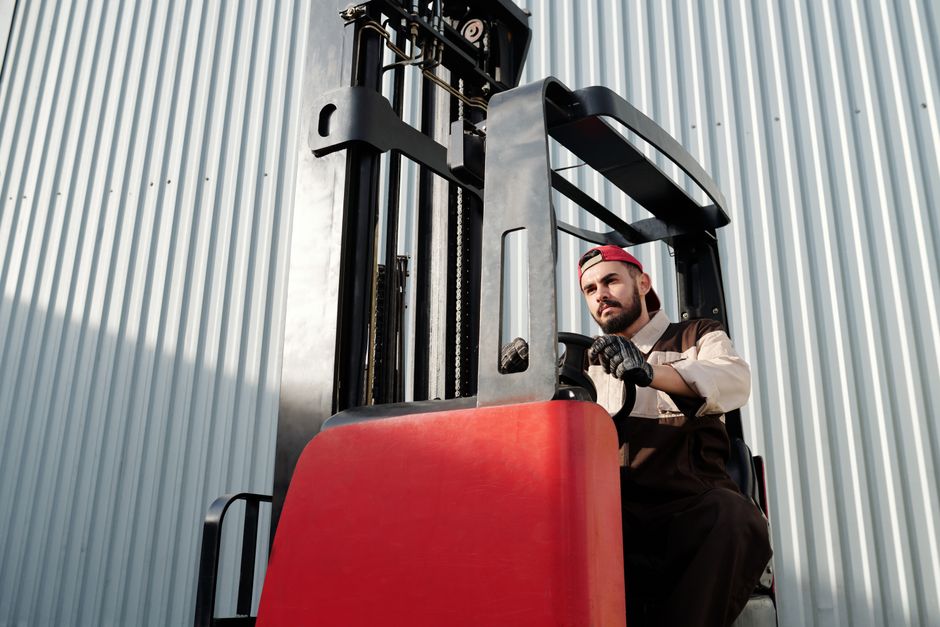
Choose a forklift by matching the actual load weight, load center, attachment, and required lift height to the ratings on its readable capacity plate. Do not treat the largest number on the plate as a blanket limit: a longer load, a forward-mounted attachment, or a higher lift can reduce what the truck may safely handle.
The common mistake is asking, “Is this a 5,000-pound forklift?” The truth is that the useful question is narrower: “Is this exact truck, with this exact load and configuration, rated for this lift?” That distinction prevents the kind of forward tip-over, damaged stock, and compliance problem that starts with one misleading number.
How do I know whether a forklift can safely lift a particular load?
You know a forklift can safely lift a particular load only when the load is stable, within the capacity shown for its actual configuration, and within the plate's stated load center and lift-height limits. Start at the data plate before the pallet moves, not after the forks are under it.
According to OSHA's forklift nameplate guidance, the plate identifies details such as truck weight, capacity, specified load center, and applicable maximum lifting height. An illegible or missing plate is not a paperwork nuisance. OSHA advises against operating that truck because the operator cannot verify the rating.
Use this pre-shift decision sequence. It is deliberately strict because guessing from a pallet's appearance is foolish.
- Read the plate and identify the rated capacity, stated load center, maximum lift height, and any attachment listed.
- Confirm the load is stable or safely arranged, then determine its actual weight from available load information.
- Measure or establish the load center from the fork face or attachment face to the load's center of gravity.
- Compare the required rack or stacking height with the height and capacity shown for that configuration.
- Stop the lift if any figure differs from the plate or cannot be established; the rating must be recalculated or confirmed through the approved process.
Fork position matters too. The Canadian Centre for Occupational Health and Safety advises using forks at least two-thirds of the load length, fully inserting them, setting them as wide as practical, and spacing them evenly from the pallet's center stringer. That is not decorative technique. It helps keep the load arranged as the rating assumes.
| Check before lifting | What to match | Why it changes the answer |
|---|---|---|
| Load weight | The applicable plate capacity | OSHA requires loads to stay within the truck's rated capacity. |
| Load center | The plate's stated load center | A farther-forward center reduces allowable load weight. |
| Attachment | A plate or marking for the truck-and-attachment combination | Attachment weight and position reduce capacity. |
| Lift height | The capacity stated at the required height | Capacity and maximum height can differ between configurations. |
For the operating check, keep the truck stopped and braked when raising or lowering the forks, verify overhead clearance, and treat high-tiering as its own capacity check. CCOHS notes that a lift truck is less stable with its load raised. A pallet that is acceptable close to the floor does not earn a free pass at rack height.
Why does forklift capacity decrease when a load is longer or farther forward?
Forklift capacity decreases when a load is longer or farther forward because the load creates more turning force against the truck's counterweight. OSHA calls this the load moment: when it exceeds the vehicle moment, the rear wheels can lose contact and the truck can tip forward.
Load center is the horizontal distance from the load edge, or the vertical face of the forks or attachment, to the line through the load's center of gravity. A centered, evenly distributed load is easier to evaluate. An irregular load deserves extra caution because its center of gravity can differ from the plate's assumed location.
Here is the calculation OSHA provides, and it explains the trade-off without jargon. A truck rated for 3,000 pounds at a 24-inch load center has an allowable load moment of 72,000 inch-pounds. When the load is 60 inches long, its center is 30 inches from the fork face. Divide 72,000 by 30 and the calculated maximum load becomes 2,400 pounds, not 3,000.
That 600-pound difference is the hidden cost of treating length as irrelevant. OSHA's example states: “If a load is 60 inches long (30-inch load center), then the maximum that this load can weigh is 2,400 pounds (72,000 divided by 30).”
Do not use this one calculation as permission to override a plate. Use it to understand why the plate matters and why an unusual load calls for a recalculated, approved rating. OSHA says capacity assumes the load's center of gravity is at the center shown on the label; when it is not, the load may exceed capacity.
What does the load center on a forklift capacity plate mean?
The load center on a forklift capacity plate is the assumed horizontal distance from the fork or attachment face to the load's center of gravity, and it is part of the capacity rating rather than an optional detail. If your load center is larger than the plate value, the rated capacity no longer answers the question by itself.
For forklifts rated at 30,000 pounds or less, OSHA says the normal rating is at a 24-inch load center. Trucks rated above 30,000 pounds are normally rated at a 36- or 48-inch load center. Those figures describe the rating basis; they do not make every load of that weight acceptable.
Attachments are where teams often get caught. A sideshifter, clamp, or other front-end equipment changes the distance and adds its own weight. OSHA's illustrated nameplate example shows a 5,000-pound capacity at a 24-inch load center with forks, but 4,500 pounds with a sideshifter attachment. Same truck, different approved configuration.
Do not bolt on equipment and keep working from the old number. Under 29 CFR 1910.178, modifications or additions affecting capacity or safe operation require the manufacturer's prior written approval, and the relevant plates, tags, or decals must be changed. For a non-factory front-end attachment, OSHA also requires a marking that identifies the attachment and shows the approximate combined truck-and-attachment weight at maximum elevation with the load laterally centered.
Finish every shift handoff with one practical action: flag any new attachment, damaged or unreadable plate, unusually long pallet, irregular load, or lift that reaches a higher storage level. Hold that task until the operator and supervisor can match it to an approved rating. No production target fixes a tipped truck.
Frequently Asked Questions
Does an attachment reduce a forklift's lifting capacity?
Yes. OSHA states that an attachment's weight reduces the truck's lifting capacity, and an attachment can also move the load farther from the fulcrum. Use the rated capacity for the forklift-and-attachment combination, not the fork-only figure.
Can a forklift lift its rated capacity to its maximum height?
Only when the capacity plate specifically rates that load, at its stated load center and configuration, to that height. OSHA's nameplate examples show that capacity and maximum lifting height can vary by configuration, and OSHA directs operators not to exceed stated capacity at the highest stack heights.
Who can determine a modified forklift's new capacity rating?
The forklift manufacturer must provide prior written approval for a modification that affects capacity or safe operation. If the manufacturer gives no response or a negative response, OSHA says a qualified registered professional engineer can provide written approval after a safety analysis that addresses safety or structural issues.